Remote Monitoring Network in the NT: 4G Design Study
MarchNet concurrently measured nine LTE bands across two carriers at a remote Northern Territory monitoring network, and designed a resilient dual-carrier architecture with solar-powered repeater infill.
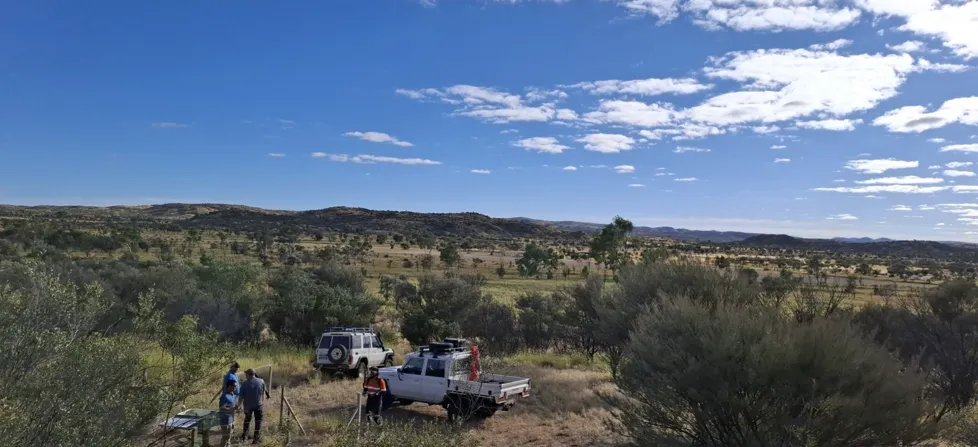
A remote scientific monitoring network in the Northern Territory relies on buried copper cables between around twenty widely spaced array elements and a central recording facility. The customer's consultants asked MarchNet to prove whether a carrier-based 4G service could replace that copper, and to produce a decision-grade engineering basis for budgeting, procurement and deployment.
The challenge
- Confirm 4G coverage and performance across every array element and the central facility.
- Validate infrastructure, power and installation constraints in the field.
- Assess integration with existing recording systems.
- Respect cultural heritage and site access limitations, with minimal new ground disturbance.
Desktop analysis plus a full field survey
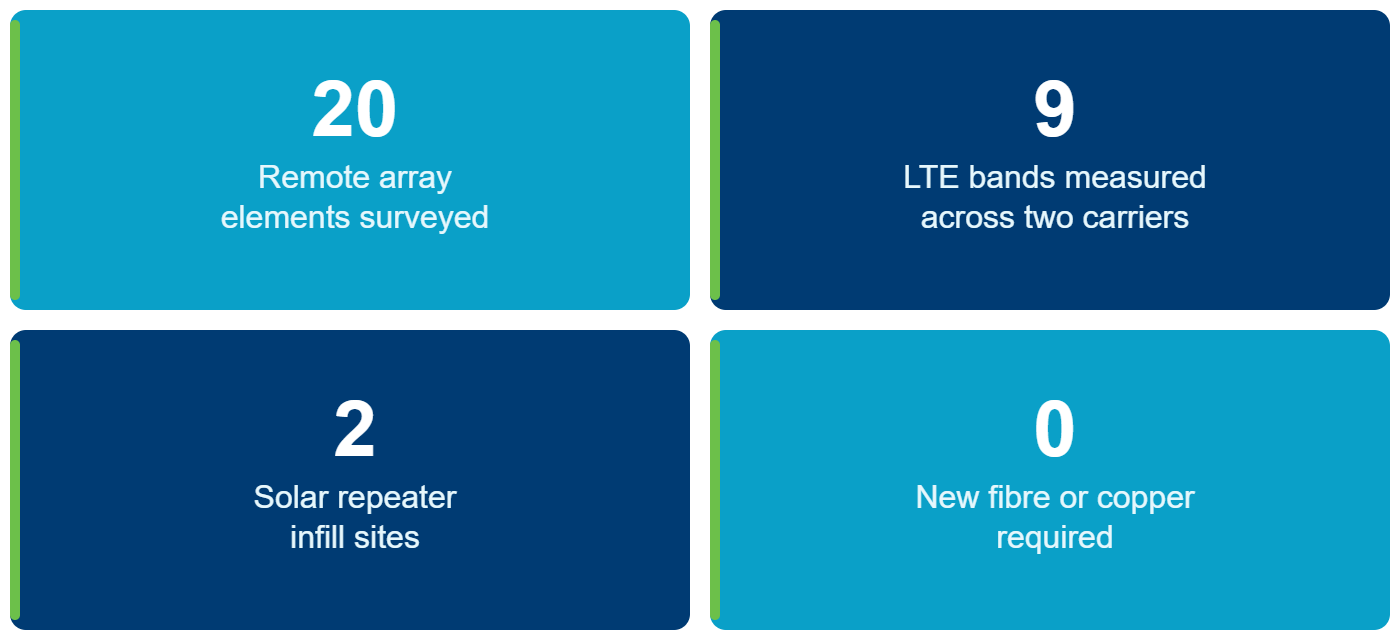
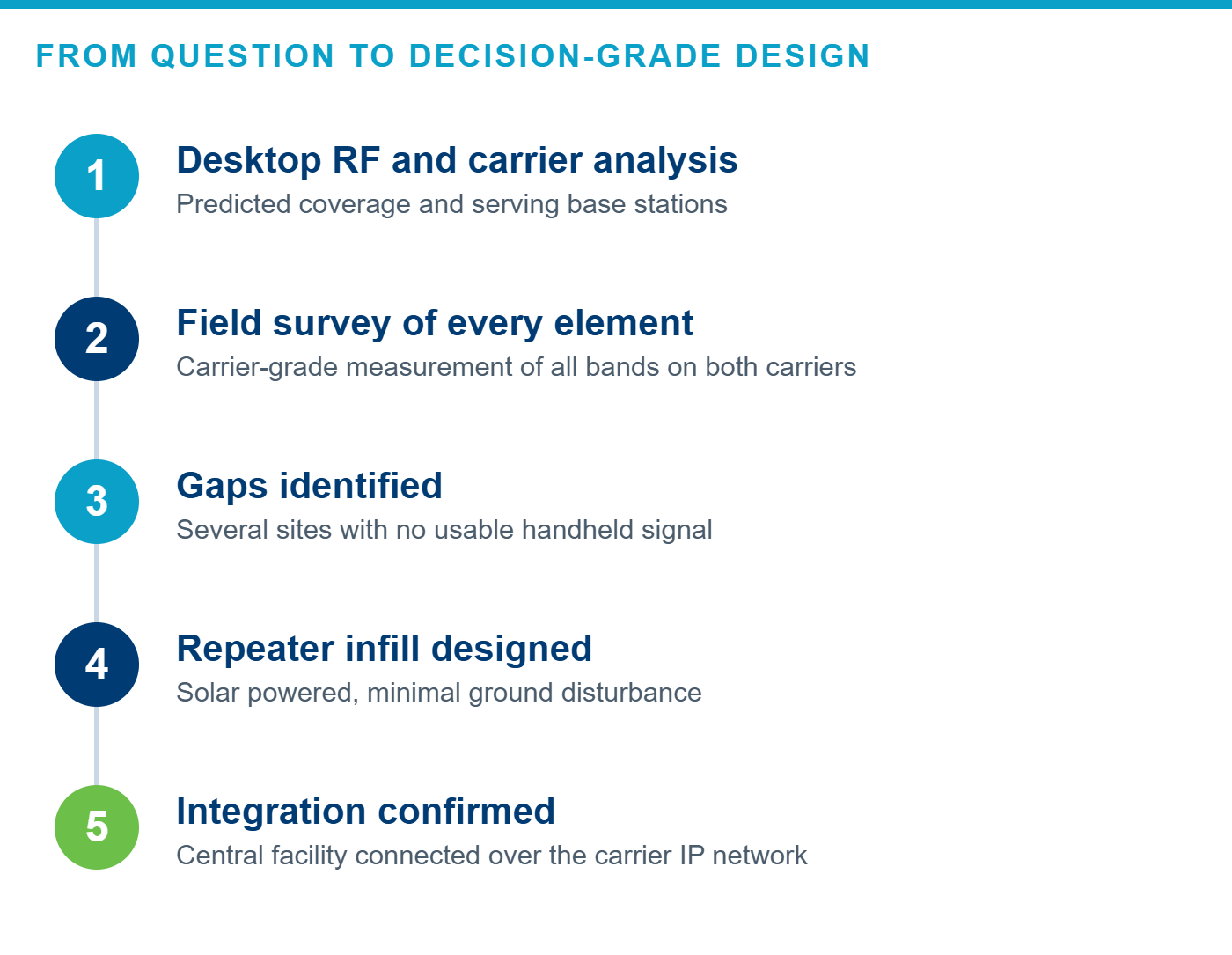
Unlike an earlier feasibility study, MarchNet combined desktop RF and carrier analysis with comprehensive on-site validation. A carrier-grade measurement platform concurrently measured nine LTE bands across two national carriers at every site, supplemented by handheld smartphone checks, and the results were compared with predicted coverage.
A targeted repeater infill layer
The recommended design is a 4G LTE intra-site network using externally mounted antennas at each element, with a targeted repeater infill layer at two strategic locations. Field results showed that some sites had no usable handheld signal and could not rely on direct macro coverage, while others were marginal. Each repeater captures a stable macro signal through a directional donor link and redistributes it to the surrounding elements through directional service antennas. Standalone solar and battery systems provide continuous 24/7 operation, and removable screw-pile style foundations minimise ground disturbance.
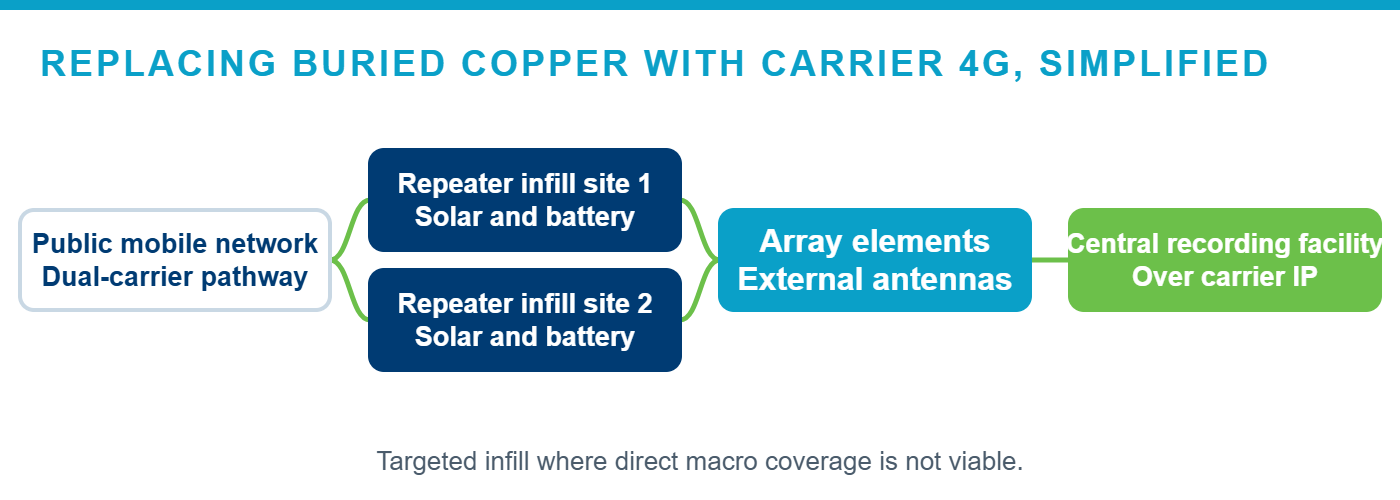
Endpoint units integrate directly with the central recording facility over the carrier IP network, removing any need for new fibre or copper between elements. The design also documents the risks that come with a public mobile network, including carrier dependency and future network changes, so the customer can make an informed decision.
The outcome
- A proven, decision-grade design that confirms a carrier 4G solution is viable and deployable.
- A staged deployment plan that treats the highest-risk coverage gaps first.
- Clear power, civils, heritage and integration requirements for procurement and approvals.
- A dual-carrier pathway and defined commissioning acceptance criteria.
Talk to MarchNet: 1300 627 244 | sales@marchnet.com.au