Coal Mine in Central QLD: Critical WAN Network Upgrade
After acquiring a private microwave network supporting a major Central Queensland coal mine, MarchNet refreshed four critical sites with carrier-grade -48V DC power, rack-mounted lithium batteries and standardised protection.
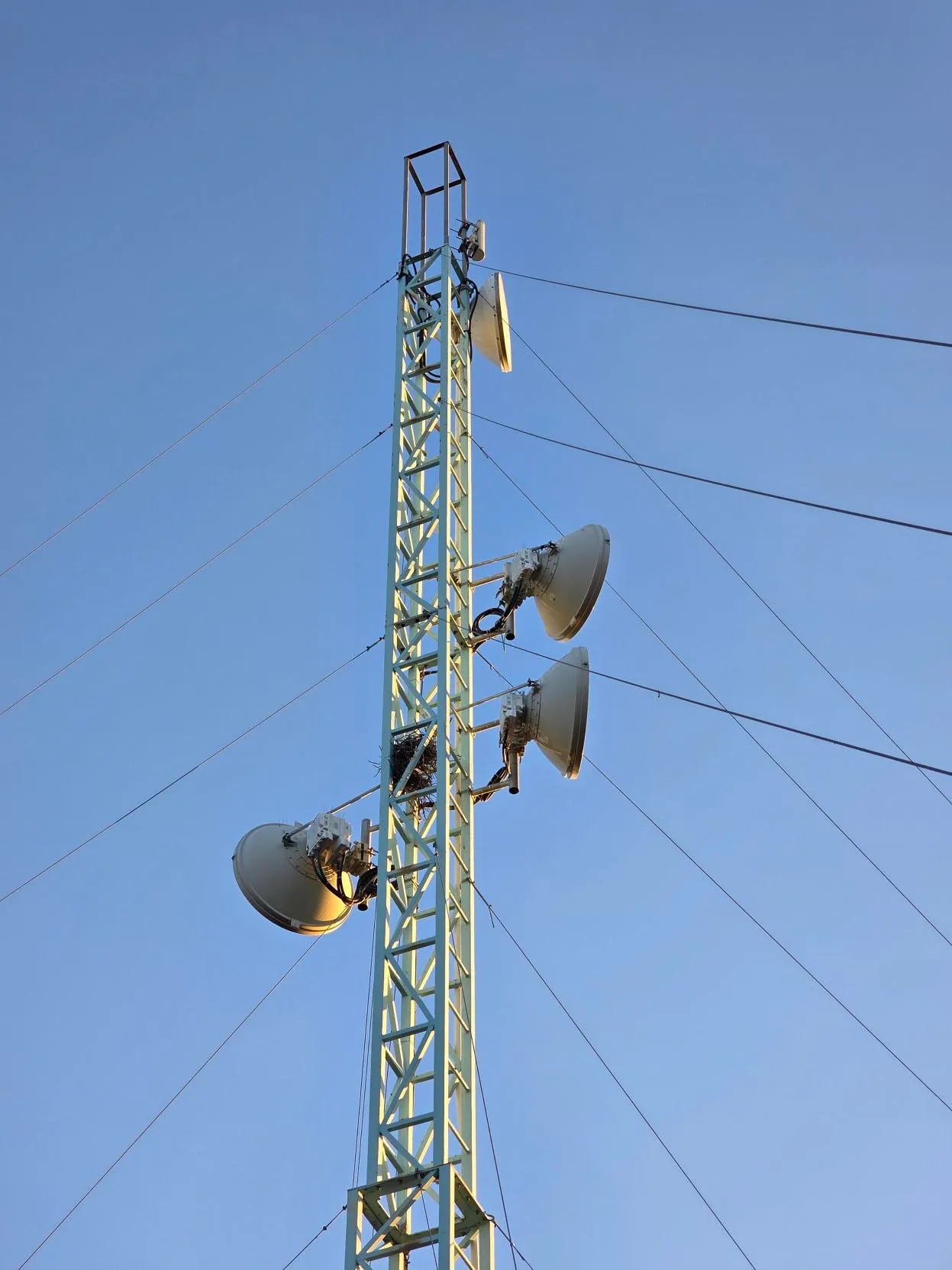
Stabilising and modernising a critical microwave WAN: a power system refresh across four strategic sites supporting a Central Queensland coal mine.
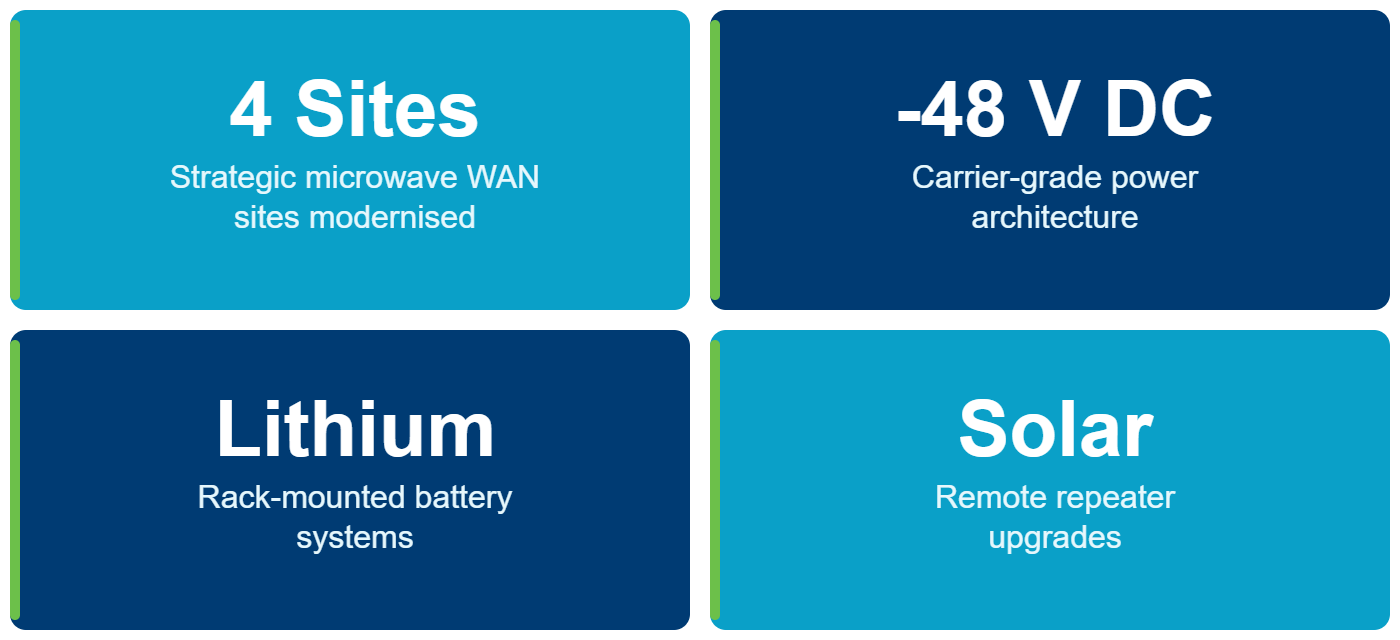
A critical microwave WAN
A coal mine in Central Queensland relies on a regional microwave WAN for critical connectivity between the mine and the communications infrastructure supporting its operations. Following MarchNet’s acquisition of a regional telecommunications network, MarchNet assumed responsibility for the infrastructure supporting the mine and for the ongoing operation of this critical network.
Ageing infrastructure, rising risk
While the inherited microwave network remained operational, MarchNet’s engineering review identified a number of ageing infrastructure and resilience risks across the network, including:
- End-of-life battery systems with declining autonomy
- Legacy DC and charging equipment
- Batteries installed directly on the floors of remote communications shelters
- Inconsistent infrastructure and power architectures between sites
- Power electronics exposed to significant thermal loading
- Congested communications cabinets and limited maintenance access
- Legacy isolation, protection and surge-management arrangements
- Increasing maintenance and supportability risks
At remote solar-powered microwave sites in particular, infrastructure had evolved over time rather than being installed as a consistent telecommunications-grade system.
A consistent, carrier-grade architecture
MarchNet developed a modernisation program covering four strategic sites forming part of the microwave WAN. Rather than simply replacing failed equipment, MarchNet redesigned the supporting infrastructure around a consistent, carrier-grade telecommunications architecture.
Telecommunications-grade power
- Carrier-grade -48 V DC power systems with modern rectifier and charging systems
- Lithium battery technology with integrated battery management and monitoring
- Standardised DC distribution, protection and isolation
- Improved surge protection, earthing and bonding
This established a common engineering standard across the network, improving resilience while making future maintenance significantly simpler and safer.
Transforming the remote microwave sites
Some of the most significant improvements occurred at the remote solar-powered repeater locations, where battery banks sat directly on shelter floors and ageing power equipment made maintenance and thermal management increasingly difficult. MarchNet re-engineered these environments:
- Removing floor-mounted battery banks
- Installing purpose-built telecommunications racks with rack-mounted lithium battery systems
- Modernising solar charging infrastructure
- Relocating critical electronics away from heat-loaded shelter surfaces
- Improving equipment separation, airflow, isolation and fault protection
- Providing significantly better maintenance access
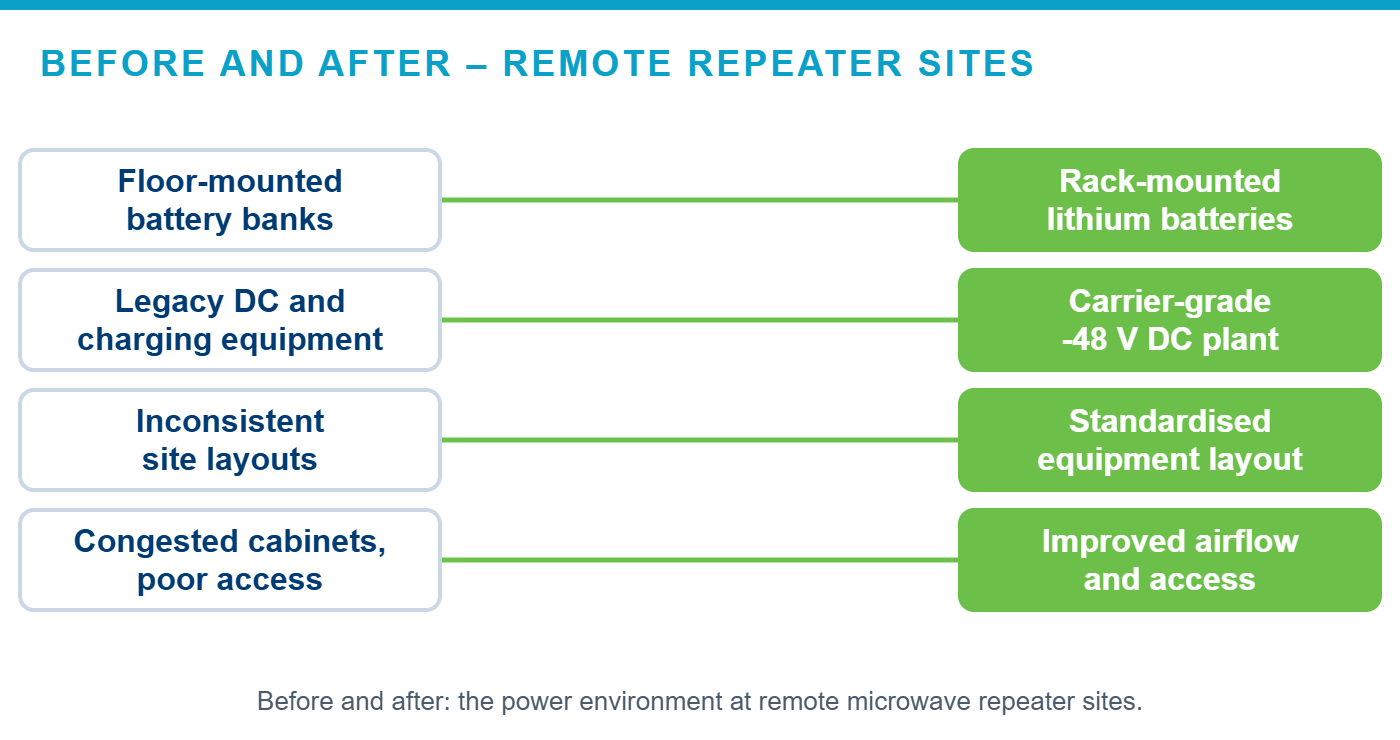
The result is a far more professional, telecommunications-grade installation designed for continued operation in demanding Central Queensland conditions.
Resilience, safety and maintainability
The refresh was ultimately about protecting the microwave WAN the mine depends on. Modernising the supporting power environment improved the network’s ability to stay operational through power interruptions, with increased battery autonomy, modern monitoring and alarming, standardised infrastructure and better fault management.
Technicians now work in a far safer environment: legacy floor-mounted batteries and inconsistent installations were replaced with rack-mounted systems, improved electrical protection, accessible isolation points and a standard equipment layout.
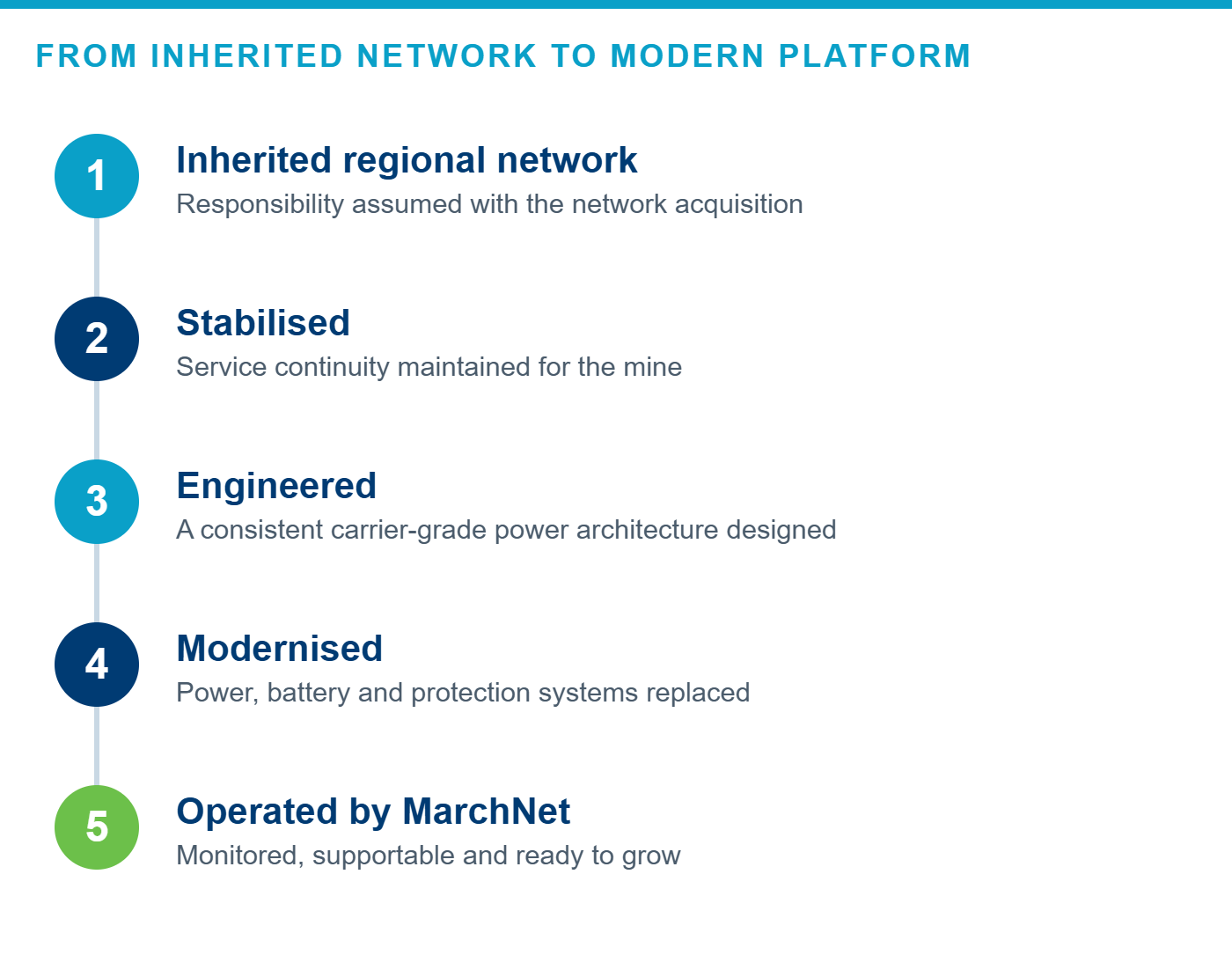
The outcome
- Service continuity following the network acquisition
- Modernisation of critical microwave WAN infrastructure
- Replacement of end-of-life power and battery systems
- Improved network resilience and battery autonomy
- Removal of legacy safety and maintenance risks
- Improved network monitoring and fault management
- A consistent, supportable engineering standard
- A stronger platform for future communications requirements
The refreshed network gives the mine a more resilient and sustainable communications backbone, while reducing the operational risks of ageing regional telecommunications infrastructure.